AI didn’t make the human parts of marketing less valuable. It made them more valuable.
That’s the thread we found running through HubSpot’s 2026 State of Marketing Report. The teams getting real returns from AI aren’t the ones with the best prompts. They’re the ones with a solid brand voice who know it well. They have a comprehensive website and content strategy that can hold the traffic they earn. And they are putting in the laborious work of keeping their data clean.
As a certified HubSpot agency partner, we pulled eight graphs from the report that tell this story:
- The Top Goal Flipped — and So Did the Top Challenge
- Your Brand Point of View Is the Differentiator Now
- Mid-Market Marketers Still Lead With Their Website
- The Channels You Own Return the Most
- Everyone Can Publish Now. Few Can Differentiate.
- AI Sends Less Traffic — and Better Buyers
- Lead Quality Beats Traffic as the KPI That Matters
- A Marketing Performance Pulse Check
1. The Top Goal Flipped — and So Did the Top Challenge
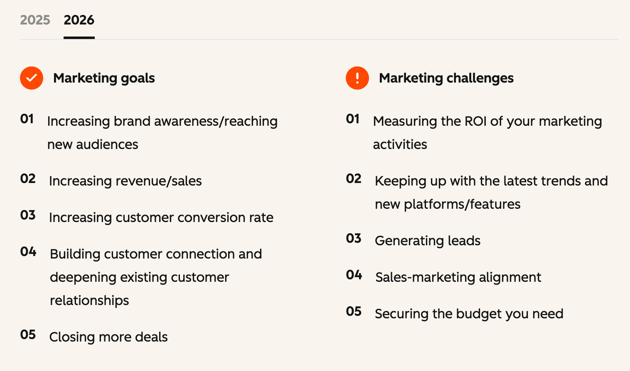
In 2025, the top goal was increasing revenue and sales. In 2026, it’s increasing brand awareness and reaching new audiences.
That tracks with everything AI turned upside down. When buyers ask an AI assistant instead of scrolling a results page, being known starts to matter more than being found.
The top challenge flipped, too. Last year it was generating traffic. This year it’s measuring the ROI of marketing activities. We’re only now getting decent insight into AI referral traffic. Add tighter privacy rules and cookie consent on top, and attribution gets harder every quarter.
Source: HubSpot 2026 State of Marketing Report
2. Your Brand Point of View Is the Differentiator Now
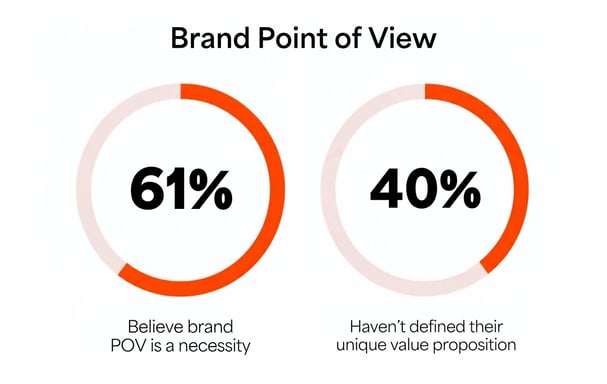
Per the report, 61 percent of marketers agree that expressing your taste and brand point of view is a necessary part of a successful AI strategy. But 40 percent of teams haven’t defined or documented their unique value proposition. That gap is the opportunity.
AI can produce content all day. What it can’t do is decide what you believe.
You have to know your brand’s point of view before you can express it in your voice, and long before AI can help you scale it. Content without a clear POV reads bland no matter how clean the grammar is.
3. Mid-Market Marketers Still Lead With Their Website
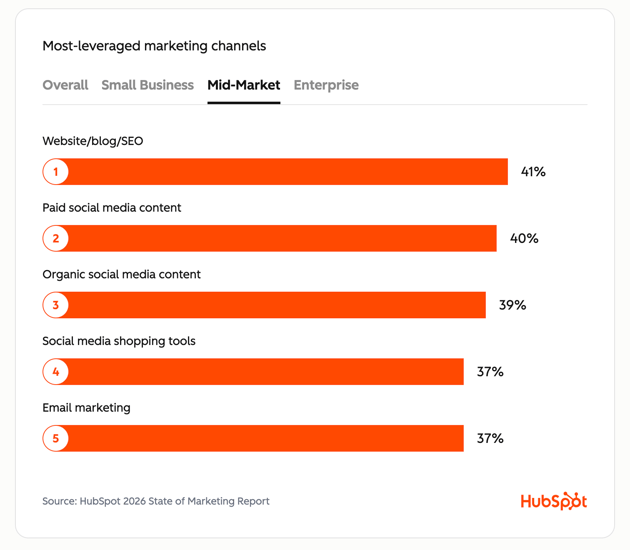
Website, blog and SEO is the most-leveraged marketing channel for mid-market companies at 41 percent, followed by paid social at 40 percent, organic social at 39 percent and social shopping tools and email at 37 percent each.
Your website is still the foundation. Every other channel points back to it. If the foundation is weak, everything you spend upstream leaks.
Also important to note: paid is growing. If you own the organic result, the AI mention and the sponsored result, you’re taking up most of what the buyer sees. That’s a lot of real estate to own.
4. The Channels You Own Return the Most
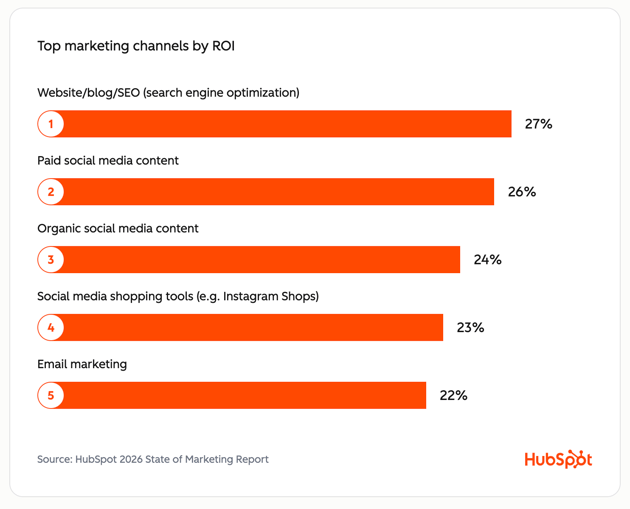
Website, blog and SEO continue to return the most, ranking first for ROI at 27 percent. These are the foundational items we tell clients to start with, and the ranking is a good reminder why. The channels with the best returns aren’t the new ones. They’re the ones you own.
5. Everyone Can Publish Now. Few Can Differentiate.
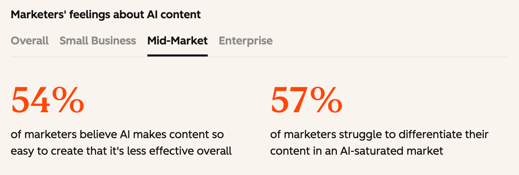
57 percent of mid-market marketers struggle to differentiate their content in an AI-saturated market, and 54 percent believe AI makes content so easy to create that it’s less effective overall.
So writing got harder, not easier. Differentiation was already tough in a saturated content market. Now the market is saturated twice over.
Our SEO and AEO/GEO team uses this test: is this something only we could write? If a competitor could publish the same paragraph under their logo, it isn’t differentiated. Your customers’ words, your plant floor, your residents’ families, your own data, your own insights — that’s the part AI can’t source.
6. AI Sends Less Traffic — and Better Buyers
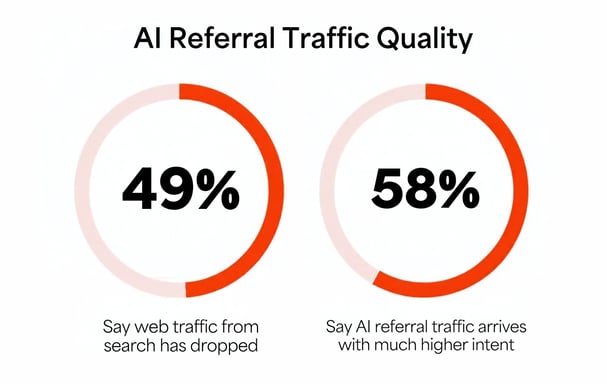
AI is sending less traffic but better-qualified traffic. Nearly half of marketers (49 percent) say web traffic from search has dropped because of AI answers, while 58 percent say AI referral traffic arrives with much higher intent — meaning visitors from ChatGPT and other LLMs are further along in the buyer’s journey.
We see this with our clients. Impressions are down across the board while AI referrals climb. And the people coming in from AI are ready to act — requesting a quote for our manufacturing clients, scheduling a tour for our senior living clients. Fewer visits, warmer visits.
7. Lead Quality Beats Traffic as the KPI That Matters
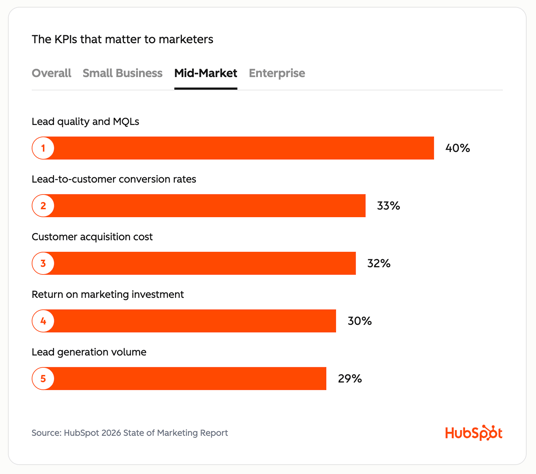
Mid-market marketers rank lead quality and MQLs as their top KPI at 40 percent, followed by lead-to-customer conversion rates (33 percent), customer acquisition cost (32 percent), return on marketing investment (30 percent) and lead generation volume (29 percent).
What isn’t on the list? Traffic.
That lines up. When volume drops and intent rises, counting sessions tells you less than it used to. If your dashboard still opens with traffic, you’re missing out on a new ballgame.
8. A Marketing Performance Pulse Check
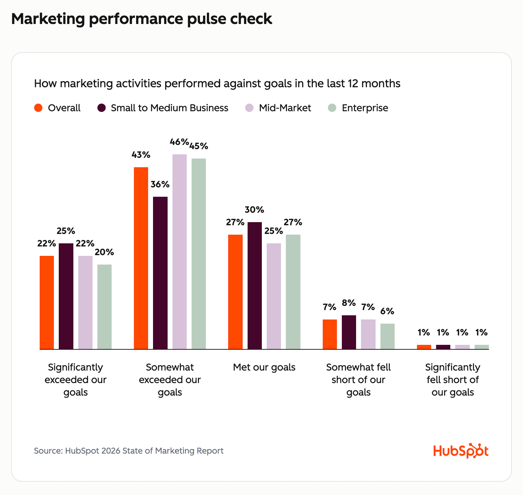
Most teams had a good year despite learning a whole new way to market. Among the mid-market marketers surveyed for the HubSpot report, 46 percent somewhat exceeded their goals, 25 percent met them and 22 percent significantly exceeded them. Only 7 percent somewhat fell short and 1 percent significantly fell short.
Marketing changed more in the past two years than in the 10 years before it, and most teams still hit their numbers. Agile. Adaptable. Well, I guess some things never change in marketing
How Can We Help Advance Your Digital Marketing Efforts?
Marketing Essentials is a full-service digital marketing and sales agency based in Ohio. Whether you’re looking for a one-time project or a vendor partnership, our team will work with your team to set up a strategic digital marketing program that achieves your goals and drives revenue.

Editor's Note: This post was originally published in 2015 and updated with the latest information in 2026.