The packaging industry is building genuinely impressive things right now. As a marketer, there's a lot of good story to tell.
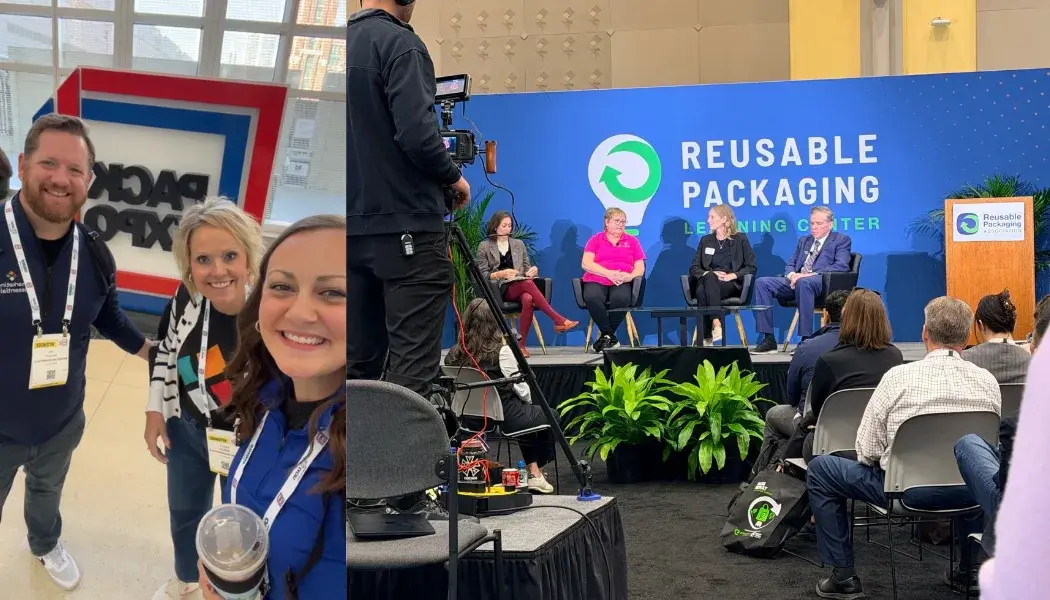
Business Development Director Jim Ashley, Marketing Strategist Ashley Roberts and I spent four days at PACK EXPO International at McCormick Place in Chicago this week. We weren't there to buy a case packer. We market for packaging companies, so we went to look at what the industry is actually making — the machinery, the materials, the flexibles — and to catch up with clients at their booths.
What Stood Out on the Floor
Flexibles were a standout. Downgauged films that use less plastic and still run on existing lines. Mono-material structures that hit the barrier numbers without the extra layer that used to make a package unrecyclable. Equipment built to handle thinner, lighter, less forgiving material without slowing a line down.
Sustainability continues to be a growing focus. The Reusable Packaging Association ran both a pavilion and a learning center. Session tracks leaned on extended producer responsibility, source reduction and cost. PMMI, the association behind the show, reports that more than 82 percent of end users are actively engaged in sustainability practices. On the floor, nobody was asking whether this mattered. They were asking what it costs, what it does to their line and how fast it pays back.
AI also has its place in packaging. Packaging Insights highlighted Siemens for its AI-powered digital twin — a working virtual replica of a line — that simulates and validates a format change before it runs on real equipment. Test a new film in the model instead of on the floor to uncover problems before they cost you a production run.
Your Buyers Aren’t All in Chicago
The packaging industry has a lot to be proud of and an exciting future ahead. The hard part — the engineering, the testing, the line trials — is done. Telling people about it is the next big chapter.
Market it. The brands you supply are looking for a recyclable format, less material, a claim that holds up. Your distributors field those questions all year and repeat whatever answer they have. You have the answer. They want to hear it from you.
The product page should name what the material replaces and what the consumers get out of it. Show the short video of the machine running the lighter film. Put real numbers in the case study — how much material came out, and what it saved. Build a distributor kit so the people selling for you can explain it correctly and easily. Opportunity is endless.
If you showed something in Chicago you’re ready to market, let’s talk about where that story should live and what it would take to get it there.
Posted by Kelly Braun on October 22, 2026