The family researching your community may never have typed your name into Google. Instead, they opened ChatGPT and asked a question — something like “my mom keeps forgetting to take her meds, and I'm scared to leave her alone, is it time for assisted living?” or “are there senior communities near me that let you keep pets, not just small ones?"
Generative AI gave them an answer and recommended a few places to look. And then, if your organization shows in the results, they click through to your website.
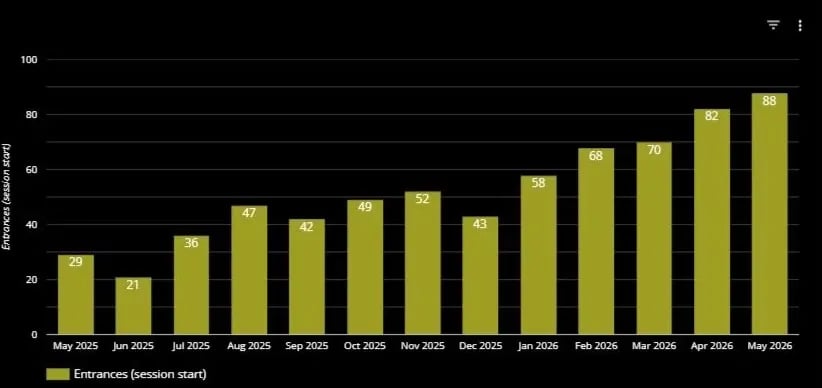
This is no longer an assumption. Our data shows that’s exactly what they are doing and at an increasing rate.
The AI Referrals We Tracked
We analyzed AI-driven website traffic from May 2025 through May 2026 across seven senior living organizations, ranging from single-site communities to multi-location regional operators.
All data comes from Google Analytics 4. One important caveat: This data does not include Google AI Overviews or AI Mode. Clicks from those still report as organic search with no AI attribution available. What you're seeing here is a conservative count of a much larger trend.
What the AI Referral Data Told Us
- Every client in the group saw consistent AI-referred traffic growth.
- Growth rates ranged from 35 percent to over 1,300 percent
-
One client saw ChatGPT referrals grow five times between 2025 and the first quarter of 2026.
- Nearly 90 percent of users were first-time visitors to those sites.
- The organizations with the highest growth rate are the ones with deeper content libraries — more blogs, more specific service pages, more FAQs that answer the questions families actually ask.
- Across the group, ChatGPT accounts for roughly 80 percent of AI-referred sessions. However, Gemini, Perplexity, Microsoft Copilot and Claude all sent as well.
Important to note, every organization in this group has an active SEO & AI visibility program in place with Marketing Essentials.
Where Families Are Landing
This is the part of the data that matters most for occupancy. Families arriving from AI aren't landing on website home pages and then browsing. They're landing on:
- Service pages, such as independent living, assisted living and memory care
- Location and community finder pages
- Tour and visit scheduling pages
- About us and contact pages
That signals intent. A family member asked an AI a specific question and got directed to a specific page that matched their needs. They're already mid-journey when they arrive – further down the buyer’s journey and higher quality leads.
Why Senior Care Is a Natural Fit for AI
Think about how seniors or families actually approach this decision. It’s a big, often emotional decision, and they may be overwhelmed. They're trying to understand care levels, costs, timelines and options — and for some whose parents are in the hospital, they are in the midst of managing a crisis as well. They don't want a list of links. They want quick and direct answers that help them exactly where they are in the decision-making process. They don’t want to hunt.
Generative AI is built exactly for that. It draws from countless sources quickly and pulls its answers from the content that's publicly available online — the blogs, the FAQs, the care guides, the detailed service pages that explain what your community actually offers and who it's right for, online reviews and more. It serves up the best answer to their specific question — then anticipates what they'll want to know next, surfacing pricing, reviews and comparisons before they even think to ask.
The communities showing up in AI responses are the ones that have invested in being genuinely useful online. They are answering the questions families ask before they know who to call.
What This Means for Your Strategy
A few things stand out from this data. Content and AI visibility go hand in hand because AI tools pull from your website content. A well-structured service page, a blog that explains what’s included in assisted living, an FAQ that addresses pricing and the different types of contracts — all of it feeds the large language models.
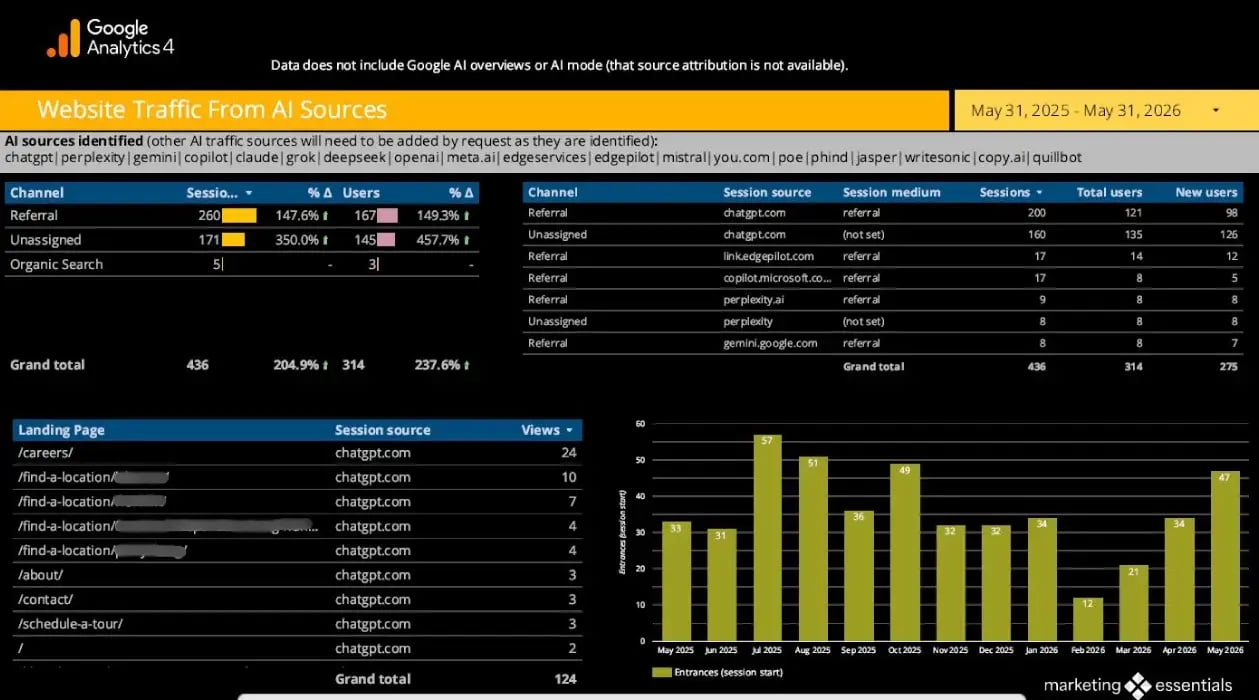
It’s also important to your strategy that you can track this – you have data to show what’s working or not working. With the right setup, a GA4 dashboard can track AI referrals. You can see which AI platforms are sending visitors to which pages. This is measurable data you can bring to justify content investment.
Example dashboard tracking:
Where to Start
Three things you can do right now.
- Check whether you're showing up. Open ChatGPT or Perplexity and ask a question a family in your market might ask — "What are my options for memory care near [city]?" or "What should I know before choosing assisted living?" See whether your community or your content appears.
- Audit your content gaps. AI platforms pull from pages that answer specific questions. If you don't have a blog explaining the difference between independent living and assisted living, an FAQ that addresses cost and contract types or detailed care pages written for families — those are gaps an AI will skip over.
- Set up tracking. If you're not already measuring AI referral traffic, you don't know what you're missing. The data exists. You just need the right setup to see it.
The communities investing in this now will have a compounding advantage. Content you build today keeps working — in search, in AI and in the inbox of every family who finds you before they ever pick up the phone.