
If your sales pipeline feels unpredictable — feast one quarter, famine the next — you're not alone. Many industrial and manufacturing companies rely heavily on referrals, trade shows and cold outreach to drive new business. And while those tactics still have a place, they're no longer enough on their own.
The buyers you want to reach are more informed than ever. Before they ever call a rep or request a quote, they've already done their research online. They've read articles, compared options and formed opinions about who knows their industry and who doesn't.
The companies winning new business today aren't necessarily the ones with the biggest sales teams. They're the ones buyers already trust before the first conversation ever happens.
That's the power of demand generation — and it belongs at the center of your industrial marketing strategy, not as an afterthought to sales.
What Is Demand Generation — and How Is It Different from Lead Generation?
These two terms are often used interchangeably, but they serve different purposes. Think of them as a dynamic duo.
Demand generation is a long-term, education-first strategy. The goal is to build awareness and trust with your target audience before they're ready to buy. You're not asking for anything yet — you're simply showing up with helpful, relevant content that positions your company as the authority in your space.
Lead generation is a conversion-focused strategy. It targets people who already recognize their problem and are actively looking for a solution. Tactics like gated content, contact forms, product demos and targeted ads fall into this category. The goal is to capture information, nurture the relationship and move prospects toward a sales-ready decision.
Here's a key insight: neither works as well without the other.
Think of demand gen as filling the top of the funnel with the right people — and lead gen as moving them through it.
Why Demand Generation Matters More in Manufacturing
Industrial and manufacturing companies are a perfect case study for why demand gen is essential. Your buyers — plant managers, operations leaders, CEOs — are making high-stakes, highly considered decisions. A capital equipment purchase or a new supplier relationship isn't an impulse buy. It involves months of research, internal sign-off and a lot of trust-building before anyone signs anything.
If people don't buy instantly, you need demand generation.
Cold outreach gets ignored. Paid ads rarely close a complex B2B sale on their own. And leads without trust are just names on a list.
The companies with a strong pipeline have consistently delivered value, long before prospects were ready to request a quote.
The Trust Equation
Trust is key in a long sales cycle. And trust isn't built in a single touchpoint. It's built through consistency, visibility and demonstrated expertise over time.
A simple way to think about it:
Trust = (Helpful Content + Consistency + Credibility) × Time
The longer you show up with value before asking for anything, the shorter your sales cycle becomes. When a prospect finally reaches out, they already know who you are, what you stand for and why you're the right fit.
How to Position Your Company as the Go-To Authority
No. 1: You need to share what you know – freely and consistently. That means answering the questions your customers are already asking. It means showing the depth of your process and expertise. It means being a resource, not just a vendor.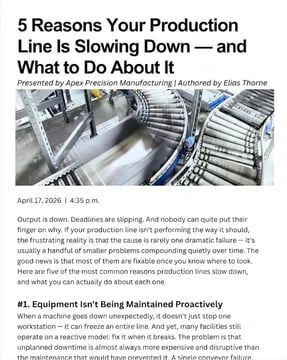
Here is what effective content marketing could look like in manufacturing:
- A blog article authored by your company expert: "5 reasons your production line is slowing down — and what to do about it."
- A comparison chart: "The difference between [process A] and [process B] — and when each makes sense."
- A thought leadership piece for LinkedIn: "Top mistakes I’ve seen when sourcing [component or service]."
Notice what none of those do: they don't pitch a product. They solve a problem. They answer a real question your buyer is already asking — and they do it with your brand name on them.
That's demand generation at work.
Where to Show Up
You don't have to be everywhere. You have to be consistent where your buyers spend time.
For most industrial companies, that means focusing on search — because when a plant manager has a problem, the first thing they do is Google it. A well-written blog article that answers a real question can drive qualified traffic to your website for years. AI-powered search is increasingly surfacing this kind of educational content as well, making it even more valuable.
Beyond search, consider LinkedIn for connecting with operations and procurement leaders, email newsletters to stay top of mind with existing contacts and industry publications or trade associations where a bylined article carries real credibility.
The goal is not to go viral. The goal is to be genuinely useful, week after week, so that when a prospect is finally ready to make a move, your name is the first one they think of.
What Demand Gen Success Looks Like for Manufacturers
When demand generation is working, the results are measurable — but they show up differently than a traditional lead gen campaign.
You'll start to see more inbound inquiries from prospects who are already warm. Sales cycles get shorter because trust was built before the first call. Lead quality improves because the people reaching out already understand what you do and why it matters. And your brand recognition grows — you become the name people mention when a peer asks for a recommendation.
Demand gen doesn't replace lead gen. It makes manufacturing lead generation work better: shorter sales cycles, warmer inquiries, and prospects who already trust you before the first call.
Your Next Step
Start with what you already know. What are the three questions your customers ask most often? Pick one. Write down five genuinely helpful answers — not a pitch, just useful information. Then decide how to share it: a blog post, an email to your list, a LinkedIn article or a piece in an industry publication.
That's it. That's the foundation of a demand generation program.
The businesses investing in this today are the ones writing the rules tomorrow.
Ready to Evaluate Your Marketing Strategy?
Start by requesting your complimentary 30-minute consultation with our industrial marketing experts.